
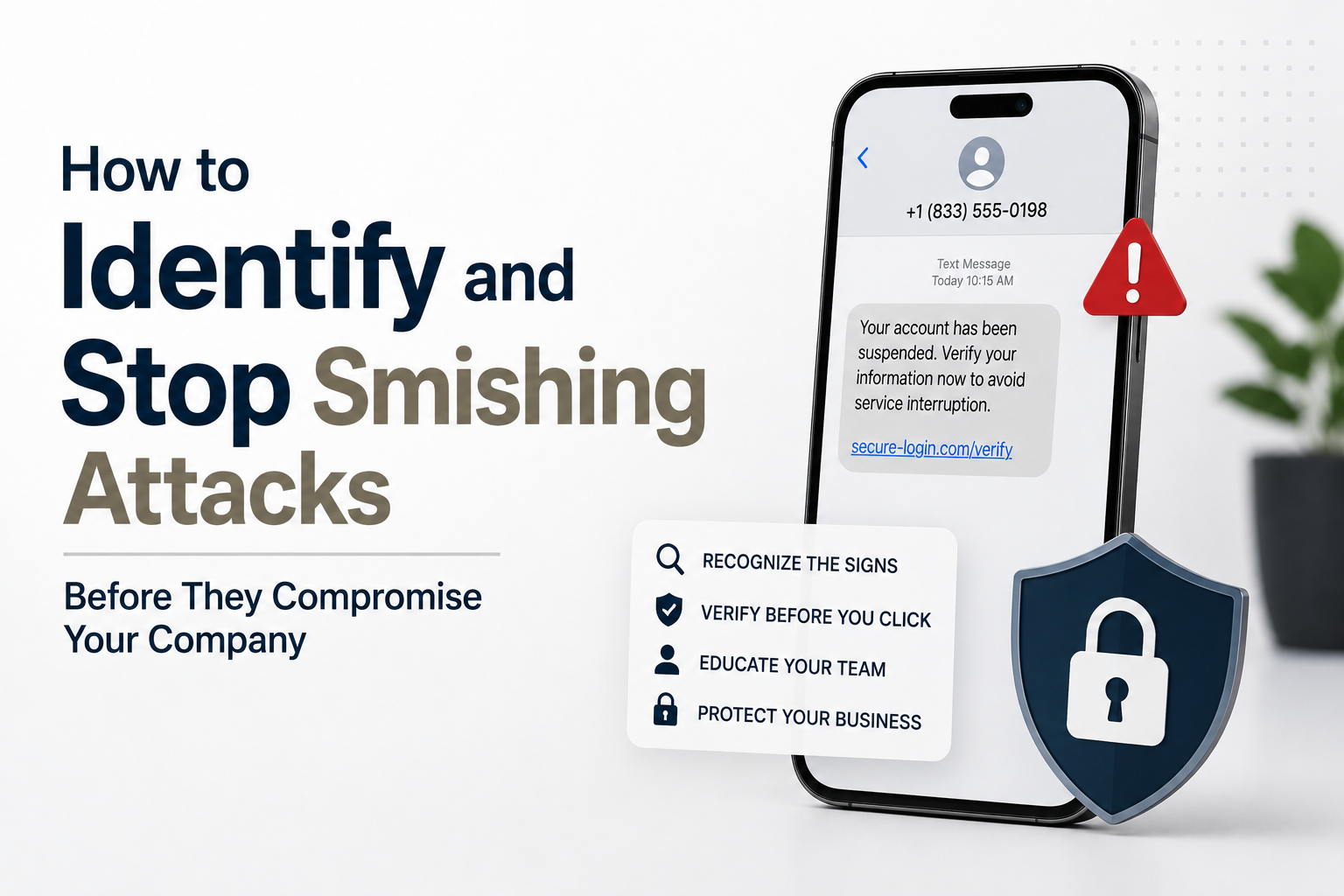
Most people know that suspicious emails can be dangerous. What many businesses overlook is that cybercriminals are increasingly using text messages to carry out attacks.
This tactic, known as smishing, has become a growing threat for organizations of all sizes. Employees often trust text messages more than emails, making them an attractive target for cybercriminals looking to steal credentials, access sensitive data, or compromise business systems.
The good news is that smishing attacks can often be identified and stopped before they cause damage.
What Is a Smishing Attack?
Smishing is a type of phishing attack delivered through text messages.
The goal is to trick someone into clicking a malicious link, downloading malware, sharing sensitive information, or providing login credentials.
These messages are often designed to look like they come from trusted sources such as:
- Banks and financial institutions
- Package delivery companies
- Software providers
- Business partners
- Coworkers
- Company leadership
The attacker’s objective is simple: convince the recipient to act before they stop and think.
Common Signs of a Smishing Attack
Smishing messages are designed to create urgency and encourage quick responses.
Watch for these common warning signs:
Unexpected Requests
Be cautious of text messages requesting immediate action when you were not expecting them.
Examples include password resets, account verification requests, or payment notifications.
Suspicious Links
Many smishing attacks include links that lead to fake websites designed to steal information.
Before clicking, take a close look at the web address. If it appears unusual or unfamiliar, do not interact with it.
Urgent or Threatening Language
Cybercriminals often try to pressure recipients into acting quickly.
Messages that claim your account will be locked, suspended, or compromised unless you act immediately should raise concerns.
Requests for Sensitive Information
Legitimate organizations rarely ask for passwords, account credentials, or confidential information through text messages.
If a message requests this type of information, it should be treated as suspicious.
Messages From Unknown Numbers
While not every message from an unfamiliar number is malicious, unexpected communications requesting action should always be verified before responding.
What Employees Should Do When They Receive a Suspicious Text
One of the most effective ways to prevent a smishing attack is to slow down.
Employees should:
- Avoid clicking links immediately
- Avoid downloading attachments
- Never provide passwords or verification codes
- Verify requests through trusted channels
- Report suspicious messages to IT or management
A quick phone call to a known contact or vendor can often confirm whether a message is legitimate.
Why One Click Can Be So Dangerous
Many people assume clicking a link is harmless.
In reality, a single click can lead to:
- Stolen usernames and passwords
- Malware infections
- Unauthorized account access
- Data breaches
- Financial fraud
- Ransomware attacks
Once attackers gain access to business systems, the consequences can spread quickly across the organization.
That is why prevention and awareness are so important.
How Businesses Can Reduce Smishing Risks
Technology plays an important role in cybersecurity, but employee awareness remains one of the strongest defenses.
Businesses can reduce their risk by:
- Providing regular cybersecurity awareness training
- Implementing multi factor authentication
- Establishing clear verification procedures
- Securing company-owned mobile devices
- Limiting access to sensitive systems and data
- Encouraging employees to report suspicious activity
The more familiar employees are with smishing tactics, the less likely they are to fall victim to them.
Build a Security First Culture
Cybersecurity is no longer just an IT responsibility.
Every employee has a role to play in protecting the business from threats like smishing. Creating a culture where employees feel comfortable questioning unusual requests and reporting suspicious activity can significantly reduce risk.
The goal is not to make employees fearful. It is to make them informed and prepared.
Final Thoughts
Smishing attacks are becoming more common because they target something people use every day: their smartphones.
Cybercriminals know that employees are busy and may be more likely to trust a text message than an email. That is why recognizing the warning signs and following proper security procedures is critical.
With the right combination of employee training, security controls, and awareness, businesses can stop many smishing attacks before they ever have a chance to compromise company systems or sensitive data.