
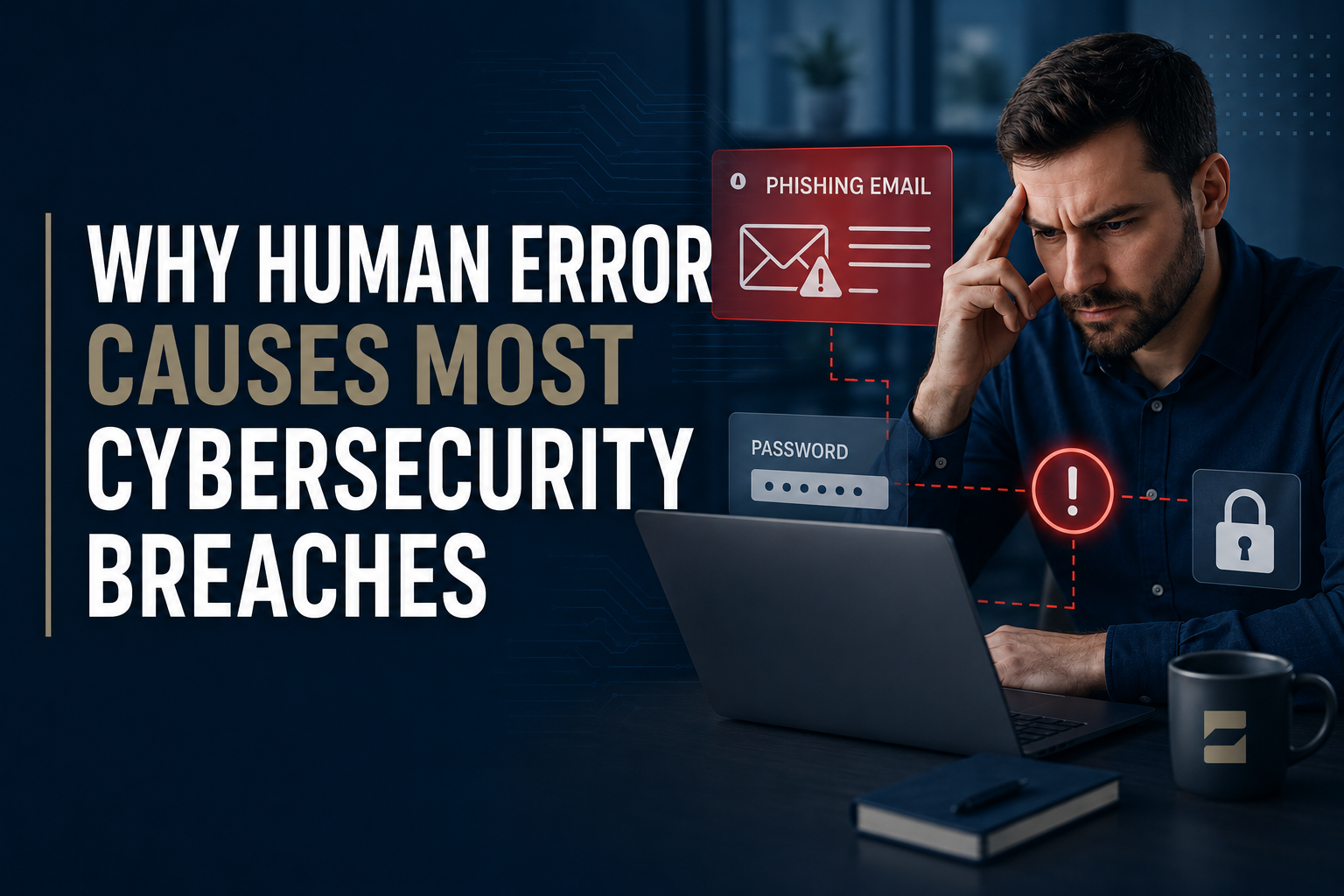
When people think about cybersecurity breaches, they often picture sophisticated hackers breaking through complex security systems.
In reality, many cyberattacks start with a simple human mistake.
Despite advances in cybersecurity technology, human error continues to be one of the leading causes of data breaches. In many cases, attackers do not need to bypass security tools at all. They simply take advantage of everyday mistakes made by employees.
Understanding how these mistakes happen can help businesses reduce risk and strengthen their overall security posture.
Cybercriminals Target People, Not Just Technology
Hackers know that people are often the easiest way into a business.
Instead of spending time trying to break through security systems, they focus on tricking employees into giving up access, clicking malicious links, or sharing sensitive information.
This is why phishing emails remain one of the most successful attack methods. All it takes is one employee opening a fraudulent attachment or entering credentials into a fake login page for an attacker to gain access.
Even businesses with strong cybersecurity tools can be vulnerable if employees are not prepared to recognize these threats.
Common Mistakes That Lead to Breaches
Human error comes in many forms, and most mistakes are completely unintentional.
Some of the most common examples include:
- Clicking on phishing links
- Using weak or reused passwords
- Sharing login credentials
- Sending sensitive information to the wrong recipient
- Failing to install software updates
- Connecting to unsecured public WiFi networks
- Misconfiguring systems or cloud applications
While these actions may seem minor, they can create opportunities for cybercriminals to access business systems and data.
Phishing Attacks Are More Convincing Than Ever
Today’s phishing emails are much harder to identify than they were a few years ago.
Cybercriminals use professional branding, realistic language, and even artificial intelligence to create messages that appear legitimate. Some emails look like they come from trusted vendors, coworkers, financial institutions, or company leadership.
Employees are often busy and moving quickly through their day. That makes it easier for a convincing phishing message to slip through unnoticed.
A single click can lead to malware infections, stolen credentials, or ransomware attacks.
Remote Work Creates Additional Risks
The shift toward remote and hybrid work environments has created new cybersecurity challenges.
Employees often access business systems from home networks, personal devices, and public locations. Without proper security controls, these environments can increase the likelihood of mistakes and security gaps.
Businesses need clear policies and security measures in place to help employees work safely no matter where they are located.
Training Makes a Difference
The good news is that human error can be reduced.
Regular cybersecurity awareness training helps employees recognize threats before they become incidents. When employees understand what phishing emails look like, how to create strong passwords, and when to report suspicious activity, they become an important part of the organization’s defense strategy.
Cybersecurity is no longer just the responsibility of the IT department. Every employee plays a role in protecting the business.
Technology Still Matters
Employee training is essential, but it should be supported by strong security controls.
Multi factor authentication, endpoint protection, email security tools, access controls, and continuous monitoring can help reduce the impact of mistakes when they happen.
People are human, and mistakes will occur. The goal is to have layers of protection that prevent a simple error from becoming a major security incident.
Final Thoughts
Most cybersecurity breaches are not caused by advanced hacking techniques. They are caused by everyday mistakes that create opportunities for cybercriminals.
The businesses that reduce their risk are the ones that combine employee education with strong cybersecurity practices and ongoing monitoring.
Technology is an important part of cybersecurity, but your employees can be either your greatest vulnerability or your strongest line of defense. Investing in training and awareness can go a long way toward protecting your business from the threats that continue to evolve every day.