
Most employees know to be cautious when opening suspicious emails. Unfortunately, cybercriminals have found another way to reach their targets.
It’s called smishing, and it is becoming one of the fastest-growing threats facing businesses today.
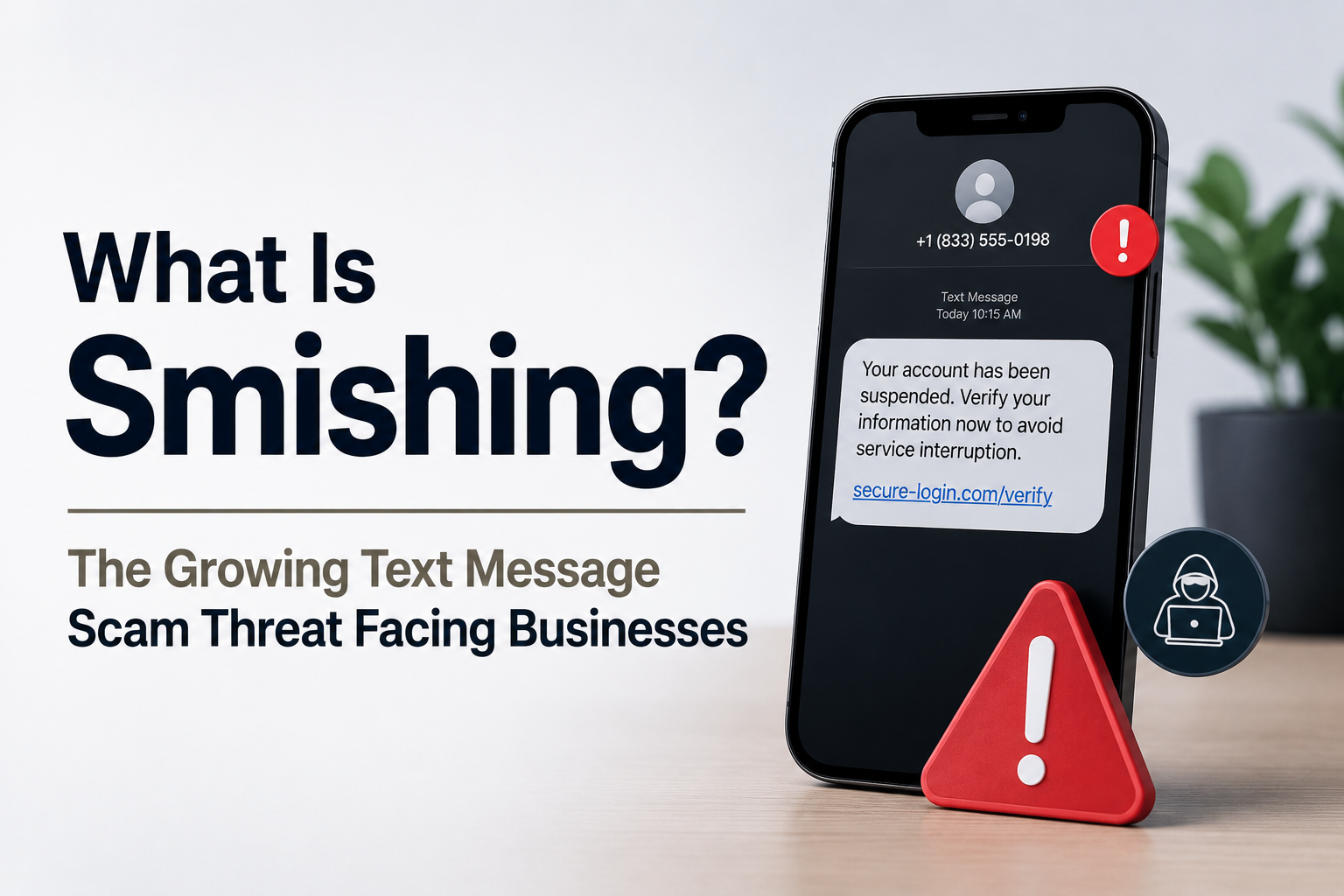
Smishing combines the words “SMS” and “phishing.” Instead of using email, attackers send fraudulent text messages designed to trick people into clicking malicious links, sharing sensitive information, or downloading malware.
Because text messages often feel more personal and urgent than emails, many people are more likely to trust them. That is exactly what cybercriminals are counting on.
What Is Smishing?
Smishing is a type of cyberattack that uses text messages to deceive recipients.
The goal is usually to convince someone to take an action that benefits the attacker, such as:
- Clicking a malicious link
- Entering login credentials
- Sharing financial information
- Downloading malware
- Approving fraudulent payments
- Providing access to company accounts
These messages often appear to come from trusted sources such as banks, delivery services, software providers, coworkers, or even company leadership.
At first glance, the message may seem completely legitimate.
Why Smishing Is Becoming More Common
Text messages have one major advantage for cybercriminals.
People tend to read them.
Most text messages are opened within minutes of being received, making them an effective way to create urgency and prompt immediate action.
Employees are also becoming better at spotting suspicious emails, which has led attackers to focus more attention on mobile devices and text messaging.
As businesses continue to support remote and hybrid work environments, employees increasingly rely on smartphones to access business applications, email, and company information. This creates additional opportunities for attackers.
What Does a Smishing Message Look Like?
Smishing messages are designed to create urgency and encourage quick action.
Common examples include:
- “Your password is about to expire. Click here to update it.”
- “Suspicious activity detected on your account. Verify your identity now.”
- “A package delivery could not be completed. Confirm your information here.”
- “You have an unpaid invoice requiring immediate attention.”
- “Your company account has been locked. Log in to restore access.”
The message usually includes a link that directs the user to a fake website designed to steal information or install malicious software.
In some cases, the attacker may also request a phone call or text response to gather information directly.
Why Businesses Should Be Concerned
A successful smishing attack can have serious consequences.
If an employee enters login credentials into a fake website, attackers may gain access to email accounts, cloud applications, customer data, financial systems, or other sensitive business resources.
In some cases, stolen credentials are later used to launch ransomware attacks or business email compromise scams.
For organizations in healthcare, legal, financial services, education, and nonprofit sectors, the potential impact can be significant due to the sensitive information they manage every day.
Warning Signs of a Smishing Attempt
While smishing attacks are becoming more sophisticated, there are still red flags employees should watch for.
These include:
- Unexpected text messages requesting immediate action
- Messages containing suspicious links
- Requests for passwords or sensitive information
- Poor grammar or unusual wording
- Messages from unknown numbers
- Threats involving account suspension or penalties
If something feels suspicious, it is always better to verify the request through a trusted source before responding.
How Businesses Can Protect Against Smishing
The best defense against smishing combines employee awareness with strong security practices.
Businesses should consider:
- Providing regular cybersecurity awareness training
- Implementing multi factor authentication
- Encouraging employees to verify unexpected requests
- Limiting access to sensitive systems and data
- Using mobile device security solutions
- Establishing procedures for reporting suspicious messages
When employees know what to look for, they are far less likely to fall victim to these attacks.
Final Thoughts
Smishing attacks are growing because they take advantage of something most people use every day: their smartphones.
Cybercriminals understand that text messages often feel more urgent and trustworthy than emails, making them an effective tool for stealing information and gaining access to business systems.
By educating employees and strengthening security practices, businesses can reduce the risk of smishing attacks and better protect the people, data, and systems that keep their operations running.