
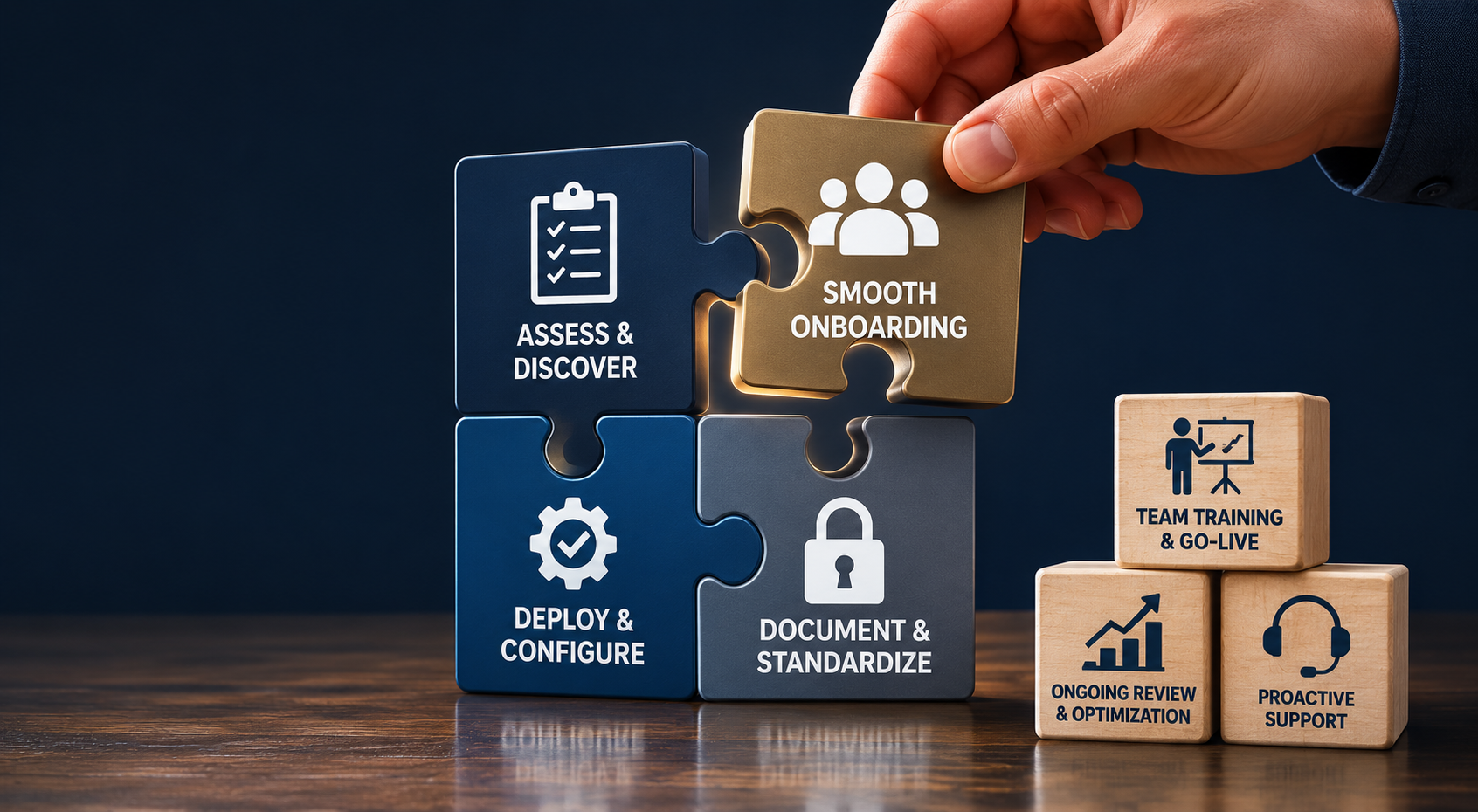
Switching IT providers or partnering with a managed IT services company for the first time can feel overwhelming. Many businesses worry about downtime, disruptions, lost information, or a complicated transition process. The reality is that a well-structured onboarding experience should feel organized, transparent, and carefully managed from start to finish.
At Bacheler Technologies, onboarding is designed to reduce stress, improve visibility into your environment, and create a strong foundation for long-term IT success. A professional onboarding process is about more than installing tools — it’s about understanding your business, improving security, documenting systems, and creating a proactive support strategy that helps your organization operate more efficiently.
Discovery and Assessment Phase
The onboarding process typically begins with a discovery and assessment phase. This is where the managed IT provider learns how your business operates, what technology you currently use, and where potential risks or inefficiencies exist.
During this phase, your IT partner will often review:
- Network infrastructure
- Computers and servers
- Microsoft 365 or cloud environments
- Cybersecurity protections
- Backup systems
- Internet and phone services
- Vendor relationships
- Existing documentation
- Compliance requirements
The goal is to develop a complete picture of your environment before making changes. This allows the provider to identify vulnerabilities, outdated systems, and opportunities for improvement while minimizing disruption to daily operations.
A strong assessment phase also helps uncover hidden issues that may have gone unnoticed, such as unsupported devices, inconsistent backups, weak passwords, or unmanaged software.
Tool Deployment and Configuration
Once the assessment is complete, the next step is deploying and configuring the tools needed to support and protect your environment.
This may include:
- Remote monitoring and management software
- Endpoint protection and antivirus tools
- Multi-factor authentication
- Backup and disaster recovery systems
- Email security filtering
- Patch management platforms
- Documentation systems
- Network monitoring solutions
A professional managed IT provider carefully stages these deployments to avoid interrupting productivity. Users are informed about upcoming changes, timelines are communicated clearly, and deployments are typically scheduled during low-impact periods whenever possible.
This phase also allows the provider to begin proactive monitoring. Instead of waiting for problems to occur, systems can now be monitored continuously for security risks, hardware failures, or performance concerns.
Documentation and Standardization
One of the most important — and often overlooked — parts of onboarding is documentation.
Many businesses operate for years without complete records of their systems, passwords, vendors, licenses, or network configurations. This creates major challenges during outages, staff changes, or cybersecurity incidents.
During onboarding, a managed IT provider typically documents:
- Network diagrams
- Device inventories
- User accounts and permissions
- Software licensing
- ISP and vendor information
- Firewall configurations
- Backup procedures
- Security policies
- Standard operating procedures
Standardization is equally important. When devices, configurations, and security policies are standardized, support becomes faster, more secure, and more predictable.
This process creates consistency across the organization and reduces the risk of preventable IT issues caused by outdated or inconsistent setups.
Team Training and Go-Live
Technology changes are most successful when employees understand what is happening and who to contact for support.
During onboarding, your IT provider should communicate clearly with your team and provide guidance on:
- How to submit support requests
- New cybersecurity procedures
- Password and MFA requirements
- Remote access processes
- Best practices for email security
- Emergency support procedures
This phase often includes a formal go-live period where the managed IT provider becomes the primary point of contact for support and monitoring.
A smooth go-live process is usually the result of careful preparation behind the scenes. Users should know what to expect, leadership should understand escalation paths, and communication should remain consistent throughout the transition.
The best onboarding experiences make employees feel supported rather than confused.
First 30–90 Day Review
Onboarding does not end after deployment. A quality managed IT provider continues reviewing the environment during the first several months to ensure everything is operating properly.
The first 30–90 days are often used to:
- Fine-tune monitoring systems
- Address newly discovered issues
- Improve security settings
- Review support trends
- Optimize workflows
- Prioritize technology upgrades
- Build long-term IT roadmaps
This review period helps ensure the partnership is delivering measurable value and allows both the provider and the client to align expectations moving forward.
It also creates an opportunity to discuss strategic improvements instead of only focusing on technical support tickets.
Real Example: A Smooth Onboarding Experience
A growing professional services firm with approximately 40 employees partnered with a managed IT provider after experiencing recurring outages, inconsistent support, and growing cybersecurity concerns.
During onboarding, the provider discovered several outdated systems, inactive backup alerts, and multiple users without multi-factor authentication enabled. Over a three-week onboarding period, the provider deployed centralized monitoring tools, improved endpoint security, standardized user access policies, and fully documented the environment.
Employees received clear communication throughout the process, including training on security best practices and updated support procedures. Because onboarding was carefully planned and phased, the business experienced no major downtime during the transition.
Within the first 60 days, support response times improved significantly, recurring technical issues decreased, and leadership gained better visibility into their technology environment and future IT planning needs.
Why Structured Onboarding Matters
A successful onboarding process sets the tone for the entire IT partnership. Businesses should look for managed IT providers that prioritize communication, documentation, proactive planning, and transparency throughout the transition.
At Bacheler Technologies, onboarding is approached with a structured process designed to minimize disruption while improving security, visibility, and long-term operational stability. From discovery and deployment to training and ongoing review, the focus is on building a reliable technology foundation that supports business growth and peace of mind.