
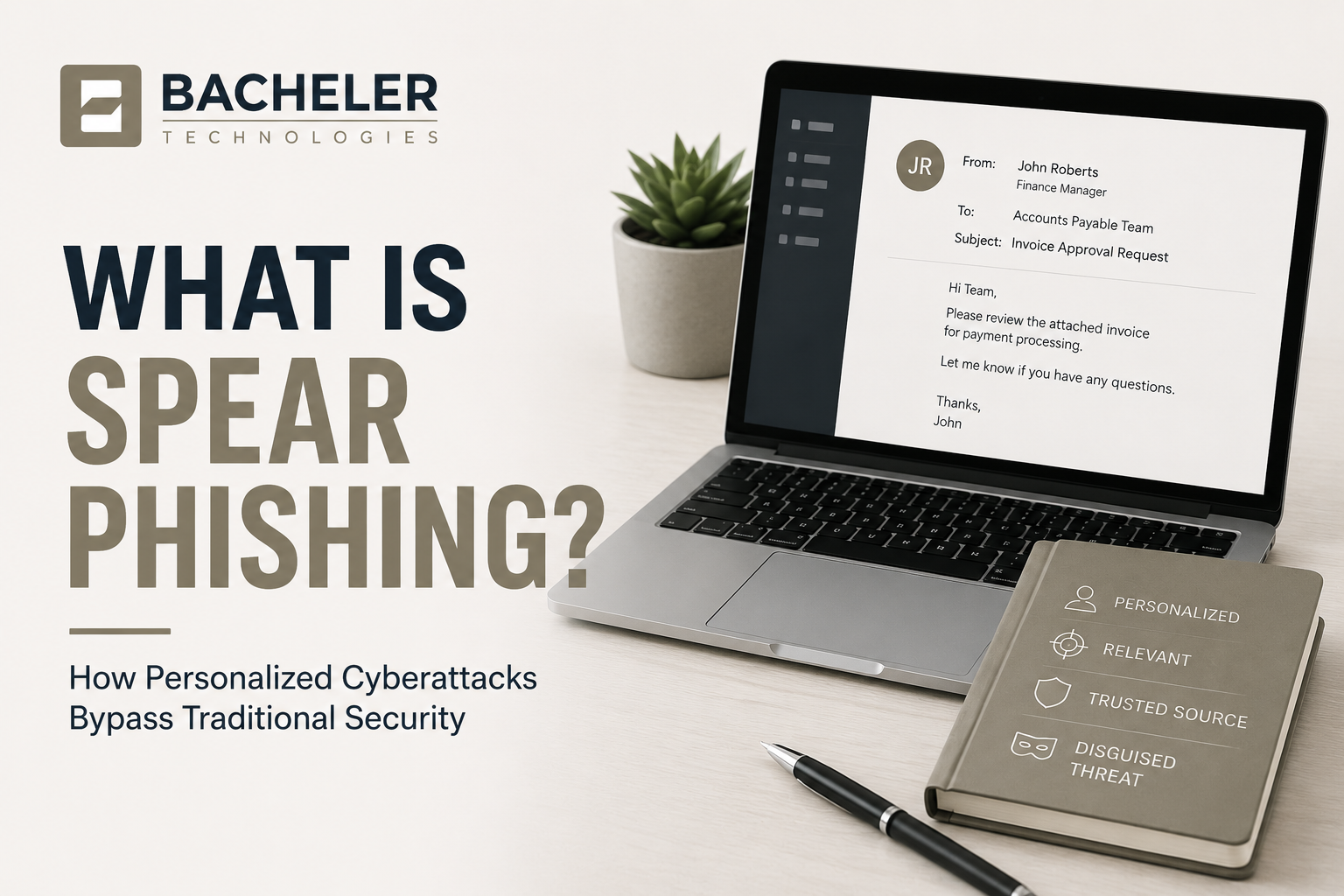
Most people are familiar with phishing emails. They are often sent to thousands of recipients at once and rely on someone making a mistake.
Spear phishing is different.
Instead of casting a wide net, cybercriminals carefully research a specific person, company, or department before launching an attack. The result is a highly personalized message that looks legitimate and can be much harder to detect.
As businesses continue to strengthen their cybersecurity defenses, attackers are increasingly turning to spear phishing because it targets people rather than technology.
What Is Spear Phishing?
Spear phishing is a targeted cyberattack that uses personalized emails, messages, or communications to trick a specific individual into revealing sensitive information or taking a harmful action.
Unlike traditional phishing campaigns, spear phishing attacks are customized for the intended victim.
The attacker may gather information from:
- Company websites
- Social media profiles
- Press releases
- LinkedIn accounts
- Online directories
- Publicly available business information
Using this information, they create messages that appear relevant, familiar, and trustworthy.
How Spear Phishing Works
A spear phishing attack often begins with research.
The attacker identifies key employees and learns details about their role, coworkers, vendors, customers, or business relationships.
The message may appear to come from:
- A company executive
- A coworker
- A trusted vendor
- A client
- A financial institution
- An IT provider
Because the communication references real people, projects, or business activities, employees are more likely to trust it.
The goal is typically to convince the recipient to:
- Click a malicious link
- Open an infected attachment
- Share login credentials
- Transfer funds
- Reveal sensitive information
Once access is gained, attackers can move deeper into company systems.
Why Spear Phishing Is So Effective
Traditional phishing emails often contain obvious warning signs.
Spear phishing attacks are far more convincing because they feel personal.
Imagine receiving an email that appears to come from your company’s CEO discussing a project you are actively working on. Or a message from a vendor you regularly communicate with requesting an updated payment form.
Many employees would have little reason to question the request.
The attack succeeds because it takes advantage of trust and familiarity rather than technical vulnerabilities.
Who Is Most Often Targeted?
While any employee can be targeted, cybercriminals often focus on individuals with access to sensitive information or financial systems.
Common targets include:
- Business owners
- Executives
- Finance teams
- Human resources personnel
- Operations managers
- IT administrators
- Office managers
These employees often have access to valuable information that attackers can use to achieve their objectives.
The Business Impact of Spear Phishing
A successful spear phishing attack can lead to serious consequences.
Depending on the attacker’s goals, businesses may experience:
- Data breaches
- Financial fraud
- Ransomware infections
- Account takeovers
- Operational disruptions
- Compliance violations
- Reputational damage
For organizations in healthcare, legal, financial services, education, and nonprofit sectors, the consequences can be especially severe due to the sensitive information they manage.
Why Traditional Security Tools May Not Be Enough
Many cybersecurity solutions are designed to identify suspicious links, malware, and known threats.
Spear phishing attacks can sometimes bypass these defenses because the messages often appear legitimate.
When a trusted employee willingly provides information or approves a request, technology alone may not be able to stop the attack.
This is why employee awareness remains one of the most important components of a cybersecurity strategy.
How Businesses Can Defend Against Spear Phishing
Reducing the risk of spear phishing requires a combination of technology and employee education.
Businesses should:
- Provide regular cybersecurity awareness training
- Implement multi factor authentication
- Verify financial and sensitive requests through secondary channels
- Limit access to sensitive information
- Monitor for unusual account activity
- Encourage employees to question unexpected requests
Employees should feel comfortable slowing down and verifying information before taking action.
A few minutes of verification can prevent a costly cybersecurity incident.
Final Thoughts
Spear phishing has become one of the most dangerous cyber threats because it relies on personalization and trust rather than technical exploits.
By researching employees and tailoring communications, cybercriminals can create attacks that look remarkably legitimate.
The best defense is a combination of strong cybersecurity controls, employee awareness, and a culture that encourages verification before action. When employees understand how spear phishing works, they become a powerful line of defense against attacks designed to bypass traditional security measures.