
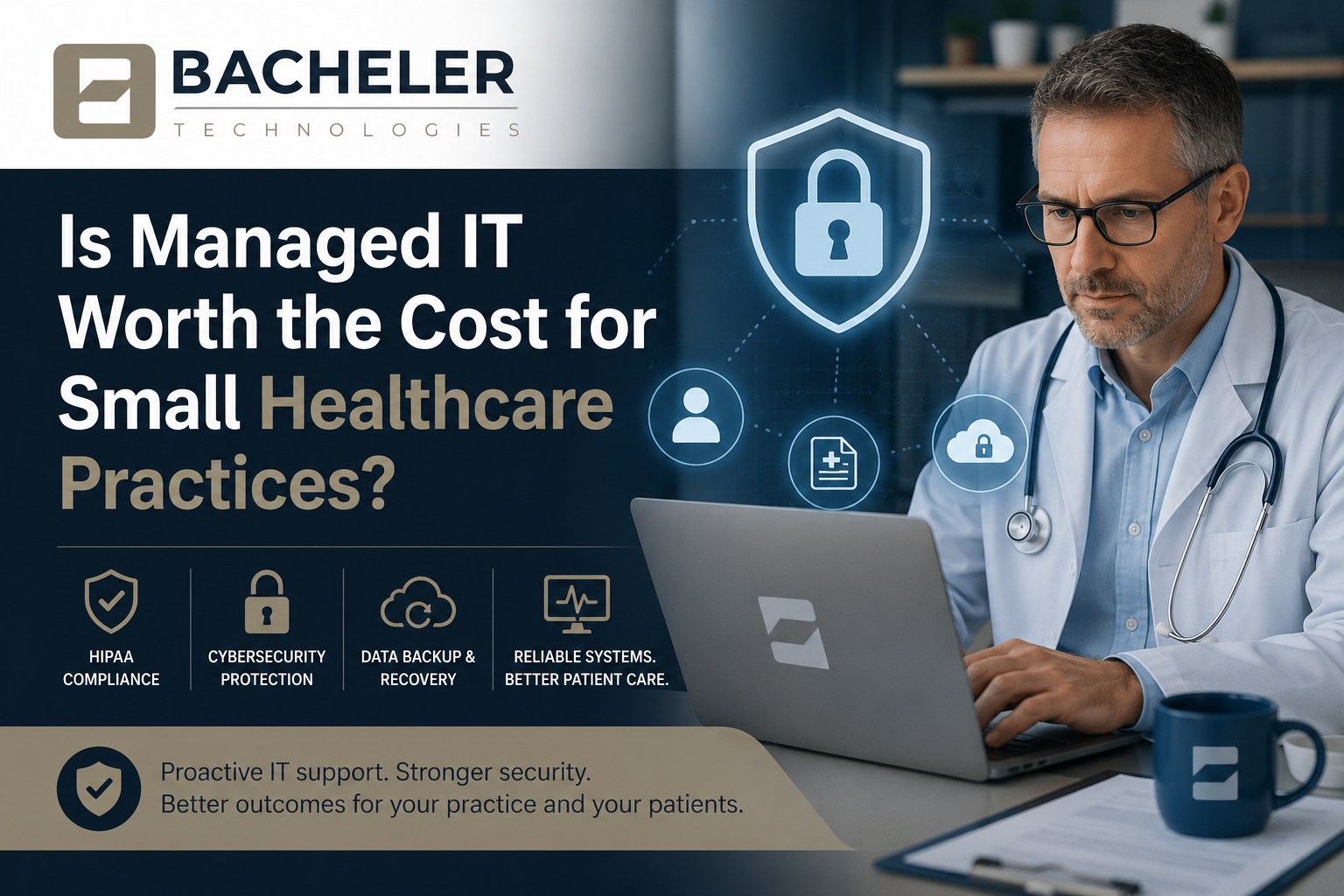
For small healthcare practices, technology is no longer just a convenience — it is directly connected to patient care, operational efficiency, compliance, and business continuity. From electronic medical records and appointment scheduling to secure communication and billing systems, even minor technology issues can create major disruptions for both staff and patients.
At the same time, healthcare organizations face some of the highest cybersecurity risks of any industry. Small practices are increasingly targeted by ransomware attacks, phishing scams, data breaches, and compliance violations because attackers know many smaller offices do not have dedicated internal IT teams.
This leaves many physicians, specialty practices, and healthcare administrators asking an important question:
Is managed IT worth the cost for a small healthcare practice?
In most cases, the answer is yes — especially when you compare the cost of proactive IT support and cybersecurity against the financial, operational, and reputational damage that can result from downtime, compliance violations, or a cyberattack.
HIPAA and Compliance Requirements
Healthcare providers are responsible for protecting sensitive patient information under the Health Insurance Portability and Accountability Act (HIPAA). Even small practices are expected to maintain safeguards that protect electronic protected health information (ePHI).
This includes:
- Secure access controls
- Multi-factor authentication
- Encrypted communications
- Data backup and recovery
- Employee cybersecurity training
- Device and endpoint protection
- Audit logging and monitoring
Many small practices assume compliance simply means having antivirus software and secure passwords. In reality, HIPAA compliance is much broader and requires ongoing monitoring, documentation, risk management, and security awareness.
A managed IT provider with healthcare experience can help practices:
- Reduce compliance gaps
- Implement layered security protections
- Maintain secure systems and backups
- Support documentation and security policies
- Improve overall technology reliability
For healthcare organizations without an internal IT department, managed IT often becomes the most practical way to maintain compliance standards consistently.
Security Risks in Healthcare IT
Healthcare organizations are prime targets for cybercriminals because patient records contain valuable personal, financial, and medical information.
Some of the most common threats healthcare practices face include:
Phishing Attacks
Staff may receive emails or text messages impersonating:
- Insurance providers
- Healthcare vendors
- Internal staff members
- Physicians or administrators
A single click can expose patient records or allow attackers into the network.
Ransomware
Ransomware attacks can encrypt:
- Patient files
- Scheduling systems
- Billing systems
- Shared drives
- Backups
For small practices, even one day of downtime can severely impact operations and patient trust.
Weak Remote Access Security
Many practices now rely on remote access, cloud applications, and mobile devices. Without proper protections, these systems can become entry points for attackers.
Outdated Systems
Older workstations, unsupported operating systems, and unpatched applications remain common in smaller healthcare offices due to budget constraints. Unfortunately, outdated systems are among the easiest vulnerabilities for attackers to exploit.
Managed IT providers help reduce these risks through proactive monitoring, patch management, advanced cybersecurity protections, and user training.
Cost vs Risk Tradeoffs
Some healthcare practices hesitate to invest in managed IT because they view it as an added monthly expense. However, the more important comparison is:
What is the cost of not having proper IT support?
A single cybersecurity incident can result in:
- Lost revenue from downtime
- Compliance investigations
- Recovery costs
- Legal exposure
- Reputational damage
- Loss of patient trust
Even smaller issues can create expensive operational inefficiencies:
- Slow systems
- Recurring outages
- Scheduling interruptions
- Poor Wi-Fi performance
- Failed backups
- Staff downtime
Managed IT services help healthcare practices shift from reactive technology management to proactive support. Instead of waiting for systems to fail, issues are identified and addressed early before they become costly emergencies.
For many practices, predictable monthly IT costs are significantly easier to manage than unexpected technology failures or security incidents.
Productivity and Patient Care Impact
Technology problems affect far more than computers — they affect the patient experience.
When systems are slow or unreliable, healthcare staff spend more time troubleshooting issues and less time focused on patient care.
Common operational frustrations include:
- Slow electronic medical record systems
- Login issues
- Printer and scanner failures
- Internet outages
- Poor communication between locations
- Repeated password lockouts
Over time, these issues reduce productivity, increase staff frustration, and impact overall workflow efficiency.
Reliable IT support helps healthcare practices:
- Improve operational efficiency
- Reduce downtime
- Support faster communication
- Maintain secure access to patient records
- Improve scheduling and workflow reliability
The result is a smoother experience for both employees and patients.
What to Look for in a Healthcare MSP
Not all IT providers understand the specific needs of healthcare organizations. Choosing the right managed service provider is critical.
Healthcare practices should look for an MSP that understands:
- HIPAA compliance requirements
- Cybersecurity best practices
- Secure remote access
- Backup and disaster recovery
- Endpoint protection
- User access controls
- Vendor coordination
- Healthcare workflow reliability
It is also important to choose a provider that focuses on proactive support rather than simply reacting to issues after they occur.
A strong healthcare-focused MSP should provide:
- Ongoing monitoring
- Security-first IT management
- Strategic technology guidance
- Fast response times
- Clear communication
- Employee cybersecurity training
Most importantly, they should understand that technology in healthcare directly affects patient care and operational continuity.
Real Example: How Proactive IT Support Helped a Specialty Practice
A specialty healthcare practice was experiencing recurring login issues, aging workstations, inconsistent backups, and increasing phishing attempts targeting staff members.
The office had no dedicated IT team and relied on reactive break-fix support whenever problems occurred. Staff productivity suffered regularly due to recurring outages and system slowdowns.
After transitioning to proactive managed IT support, the practice implemented:
- Advanced endpoint protection
- Secure backup and recovery systems
- Multi-factor authentication
- Device monitoring and patch management
- Staff phishing awareness training
Within months, the practice experienced:
- Reduced downtime
- Faster issue resolution
- Improved system performance
- Better visibility into security risks
- Increased staff confidence in daily operations
Most importantly, providers and employees were able to focus more attention on patient care rather than ongoing technology frustrations.
Why Healthcare Practices Partner with Bacheler Technologies
At Bacheler Technologies, we understand the unique challenges healthcare organizations face when balancing patient care, cybersecurity, compliance, and operational efficiency.
Our team works with professional organizations that need technology to remain secure, reliable, and aligned with business goals — without creating unnecessary complexity for staff.
We take a proactive, security-first approach to managed IT services by helping organizations:
- Reduce cybersecurity risk
- Improve operational reliability
- Strengthen compliance readiness
- Support secure remote access
- Protect critical business systems
- Minimize downtime and disruptions
For small healthcare practices, managed IT is often not just an IT investment — it is an investment in business continuity, patient trust, and long-term operational stability.