
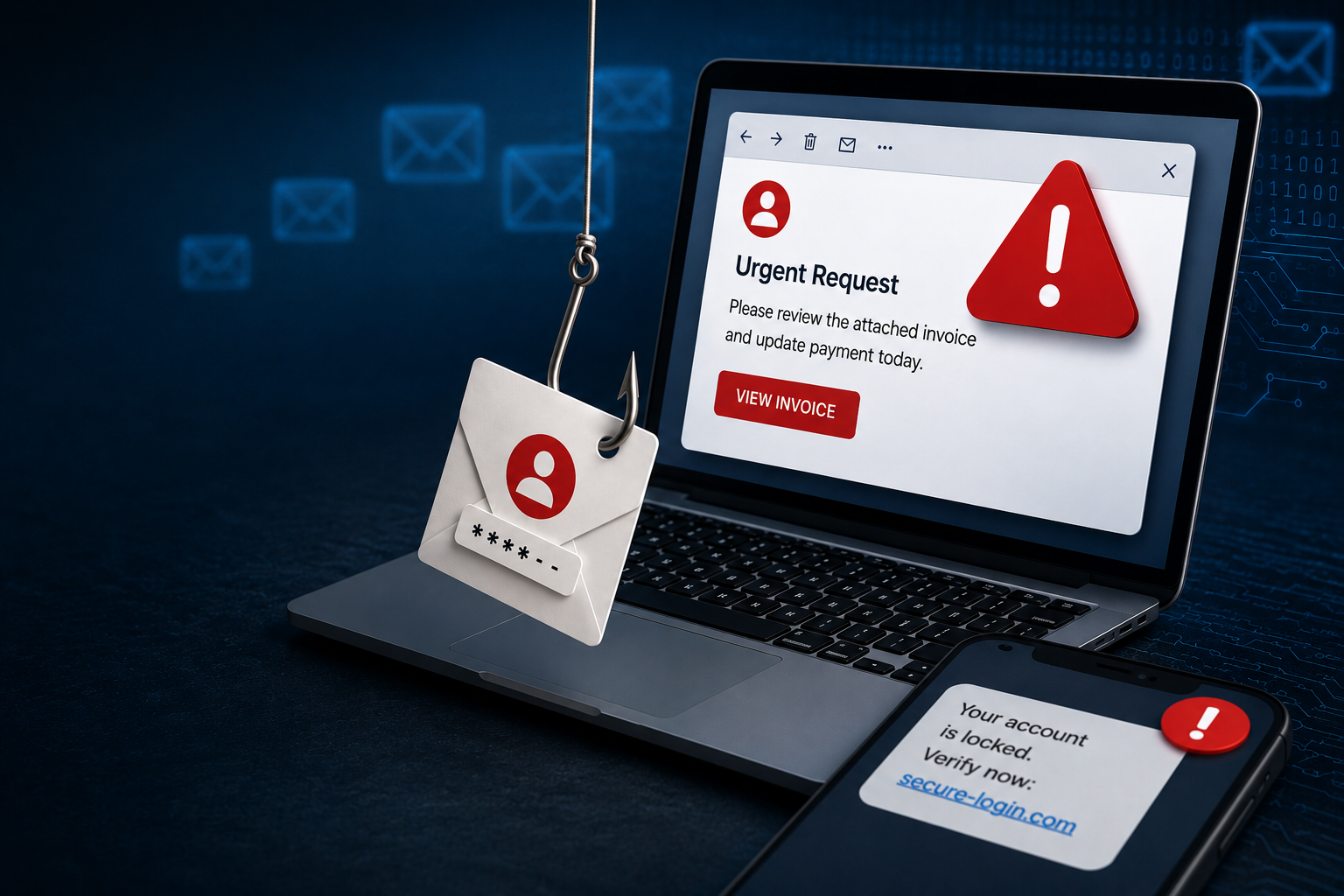
Cybercriminals are targeting businesses more aggressively than ever, and phishing remains one of the most common ways they gain access to sensitive information, systems, and money. Small and mid-sized businesses are especially attractive targets because attackers know employees are busy, communication happens quickly, and a single mistake can have serious consequences.
At Bacheler Technologies, we believe awareness is one of the strongest defenses against cyber threats. The goal of this message is not to create fear — it’s to help everyone recognize the warning signs and stay protected.
Why Phishing Is So Common
Phishing works because it targets people, not just technology.
Attackers use emails, text messages, phone calls, fake websites, and even social media messages designed to look legitimate. Their goal is to create urgency, fear, curiosity, or trust so someone reacts before thinking carefully.
Modern phishing attempts are becoming increasingly convincing because criminals now use:
- Real company logos and branding
- Fake login pages that closely mimic Microsoft 365, banks, or vendors
- AI-generated writing that sounds professional
- Spoofed email addresses and caller IDs
- Information gathered from LinkedIn, websites, or previous data breaches
These attacks are inexpensive for criminals to launch, but extremely profitable when successful.
Why Phishing Is Dangerous
A single click can lead to:
- Stolen passwords
- Unauthorized access to company email
- Financial fraud or wire transfer scams
- Ransomware infections
- Data breaches involving sensitive client information
- Business downtime and operational disruption
In many cases, attackers don’t immediately reveal themselves. Once they gain access to an account, they may quietly monitor communication for days or weeks before attempting fraud.
Common Signs of a Phishing Attempt
Phishing messages often share similar warning signs. Be cautious if you notice:
- Unexpected urgency or pressure
- Requests for passwords, MFA codes, or sensitive information
- Messages claiming to be from executives asking for secrecy
- Unfamiliar phone numbers or email addresses
- Misspellings, strange wording, or awkward formatting
- Links that don’t match the legitimate website
- Attachments you were not expecting
- Requests involving gift cards, wire transfers, or invoice changes
Text-message phishing (“smishing”) is also becoming more common. Attackers frequently pretend to be company leadership, coworkers, vendors, banks, or shipping companies.
How to Protect Yourself
The good news is that a few simple habits dramatically reduce risk.
- Stop and Verify
- If something feels unusual, pause before clicking or responding. Verify requests through a known phone number or separate communication method.
- Never Share Passwords or MFA Codes
- Legitimate companies and IT providers will never ask for your password through email or text.
- Be Careful With Links
- Hover over links before clicking. On mobile devices, press and hold the link to preview where it actually goes.
- Use Multi-Factor Authentication
- MFA adds an important layer of protection even if a password becomes compromised.
- Report Suspicious Messages
- If you suspect phishing, report it immediately. Early reporting helps prevent broader compromise.
- Keep Devices Updated
- Security updates close vulnerabilities that attackers commonly exploit.
Awareness Is Part of Security
Technology plays an important role in cybersecurity, but informed users remain one of the strongest defenses. Attackers are counting on distractions, rushed decisions, and trust. Taking a few extra seconds to verify a suspicious message can prevent major problems.
If you ever receive a questionable email, text, or phone call and are unsure whether it’s legitimate, contact your IT team or Bacheler Technologies before taking action.
Staying cautious and informed helps protect not only your device, but your entire organization.