
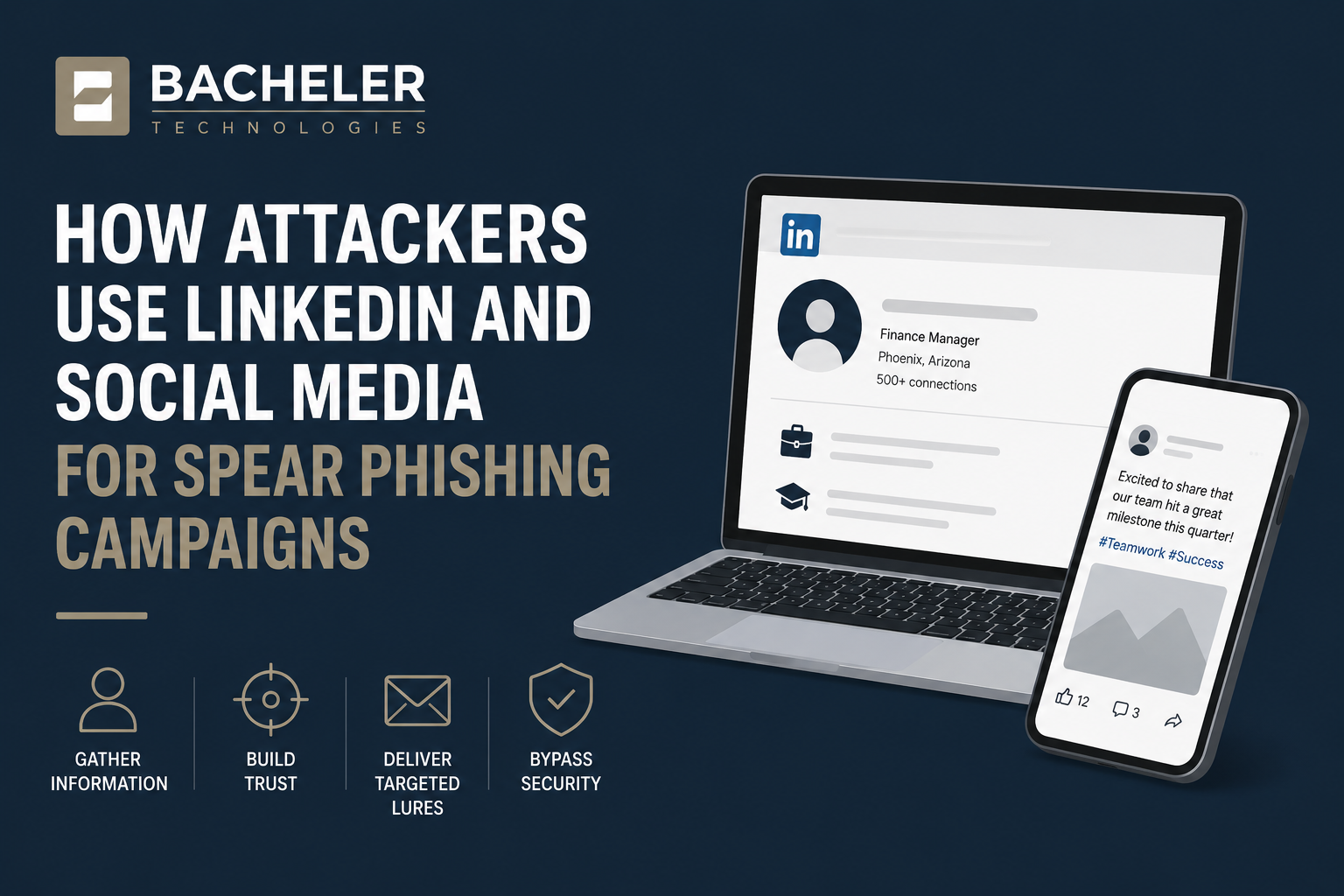
Most businesses encourage employees to maintain a professional online presence. Platforms like LinkedIn can be valuable tools for networking, recruiting, and building industry connections.
Unfortunately, cybercriminals see these platforms as valuable tools too.
Today, many spear phishing attacks begin with information gathered from LinkedIn and other social media platforms. The more attackers know about an employee, the easier it becomes to create convincing scams that appear legitimate.
Understanding how cybercriminals use publicly available information can help businesses reduce their risk and improve cybersecurity awareness.
Why Social Media Is Valuable to Cybercriminals
A successful spear phishing attack relies on one thing: trust.
The more information attackers have about their target, the easier it is to build that trust.
Social media platforms often provide details such as:
- Job titles
- Work history
- Company structure
- Employee relationships
- Current projects
- Vendor partnerships
- Business locations
- Professional interests
While this information may seem harmless, it can give cybercriminals everything they need to create highly personalized attacks.
LinkedIn Is Often the Starting Point
LinkedIn is one of the most valuable resources for attackers because it is designed to showcase professional information.
An attacker can quickly learn:
- Who works for a company
- Who manages specific departments
- Which employees handle finances
- Who has administrative responsibilities
- Which vendors and partners the company works with
With just a few minutes of research, cybercriminals can build a detailed picture of an organization’s structure.
That information can then be used to create targeted phishing emails that appear authentic.
How Spear Phishing Attacks Use Social Media Information
Imagine an attacker finds a LinkedIn post announcing that your company recently partnered with a new software vendor.
A few days later, someone in accounting receives an email that appears to come from that vendor requesting payment information or account verification.
Because the request references a real business relationship, the employee may be more likely to trust it.
Similarly, an attacker might see that an employee recently attended a conference or received a promotion. That information can be used to create personalized messages that feel legitimate and relevant.
The more personalized the attack, the greater the chance of success.
Executive Impersonation Is a Common Tactic
Social media also makes it easier for attackers to impersonate company leadership.
Executives often have public profiles that include their roles, responsibilities, speaking engagements, and company activities.
Using this information, attackers may send messages that appear to come from a CEO, CFO, or other senior leader requesting:
- Urgent wire transfers
- Sensitive documents
- Login credentials
- Employee information
- Financial records
Because employees recognize the executive’s name and role, they may be less likely to question the request.
Fake LinkedIn Messages Are Increasing
Not all attacks happen through email.
Cybercriminals increasingly use fake LinkedIn profiles to connect with employees directly.
An attacker may pose as:
- A recruiter
- A potential client
- An industry professional
- A vendor representative
- A business partner
The goal is often to build trust before moving the conversation to email, phone, or another platform where sensitive information can be requested.
In some cases, malicious links or attachments are shared directly through the platform.
How Businesses Can Reduce Their Risk
Businesses do not need to avoid social media entirely. Instead, employees should understand how attackers use publicly available information.
Some best practices include:
- Limiting the amount of sensitive business information shared publicly
- Being cautious when accepting connection requests from unknown individuals
- Verifying unexpected requests through trusted channels
- Providing regular cybersecurity awareness training
- Implementing multi factor authentication
- Encouraging employees to report suspicious communications
Employees should remember that not everyone online is who they claim to be.
Create a Culture of Verification
One of the most effective ways to stop spear phishing attacks is to create a culture where employees feel comfortable verifying requests.
If a message involves money, sensitive data, login credentials, or unusual instructions, employees should always confirm the request through a separate communication channel.
A quick phone call or direct conversation can prevent a costly mistake.
Final Thoughts
LinkedIn and social media platforms have become powerful tools for business networking, but they have also become valuable resources for cybercriminals.
By gathering publicly available information, attackers can create highly personalized spear phishing campaigns that are difficult to detect and surprisingly effective.
The best defense is awareness. When employees understand how attackers use social media information and know how to verify suspicious requests, businesses become much harder targets for spear phishing attacks.