
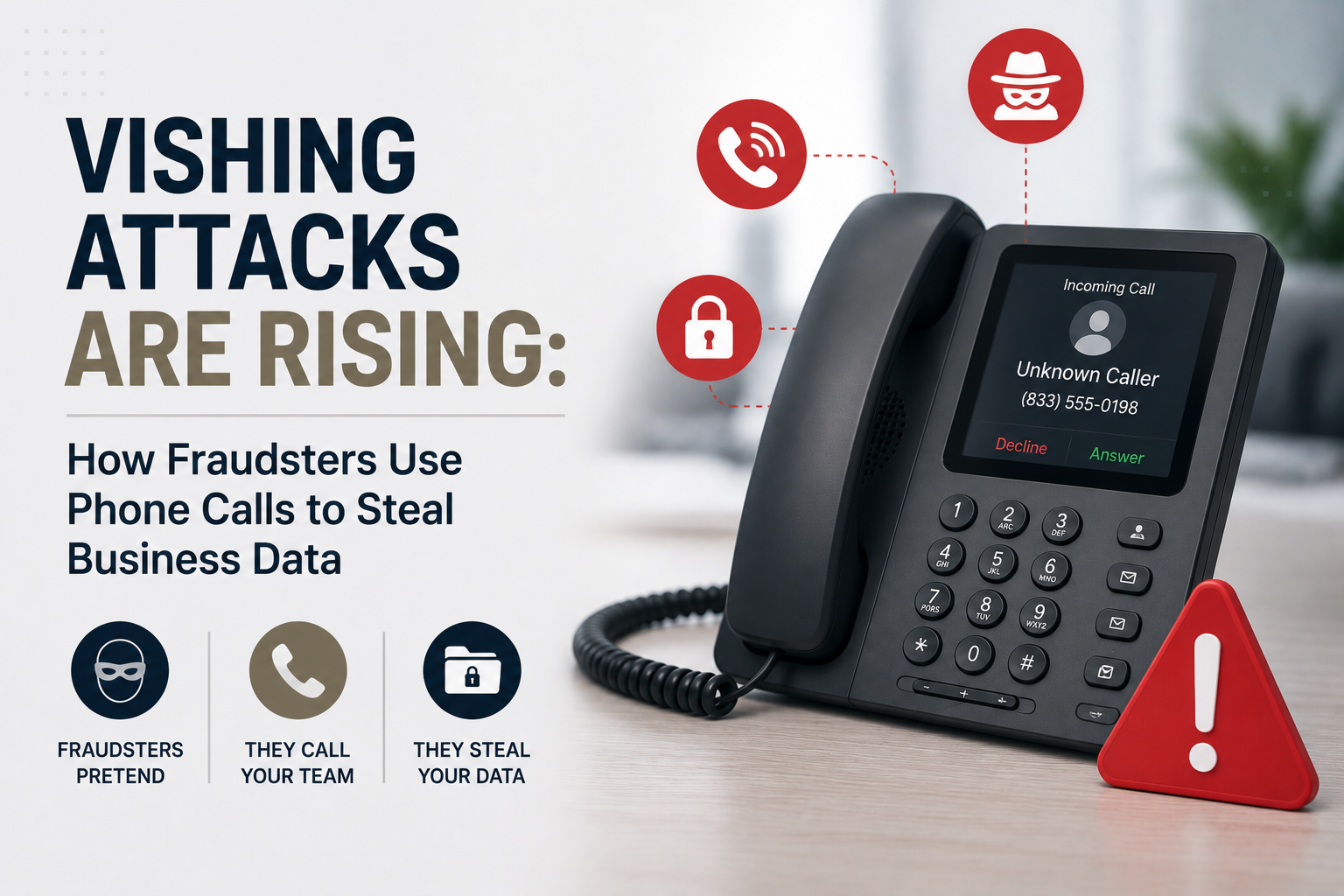
Most employees know to be cautious when opening suspicious emails or clicking unexpected text messages. Unfortunately, cybercriminals are constantly adapting their tactics.
One of the fastest-growing threats businesses face today is vishing.
Short for “voice phishing,” vishing uses phone calls instead of emails or text messages to trick people into revealing sensitive information. These attacks are becoming increasingly sophisticated, making it harder for employees to distinguish legitimate calls from scams.
As businesses continue to rely on phone communication for daily operations, understanding vishing has become an important part of cybersecurity awareness.
What Is Vishing?
Vishing is a type of social engineering attack where cybercriminals use phone calls to manipulate victims into sharing confidential information or granting access to systems.
The attacker may pretend to be:
- A bank representative
- A software vendor
- A government agency
- Technical support
- A business partner
- A company executive
- An employee from your IT department
The goal is usually to obtain sensitive information such as passwords, account details, financial information, verification codes, or access to business systems.
Why Vishing Works
Unlike emails and text messages, phone calls create a sense of personal interaction.
People are often more likely to trust someone speaking directly to them, especially if the caller sounds professional and knowledgeable.
Attackers take advantage of this trust by creating scenarios that seem urgent or important. They may claim that an account has been compromised, a payment needs approval, or a system issue requires immediate attention.
Many employees want to be helpful and resolve problems quickly, which is exactly what cybercriminals are counting on.
Common Vishing Scenarios
Vishing attacks come in many forms, but some tactics appear repeatedly.
Fake IT Support Calls
An attacker claims to be from the company’s IT department and informs the employee of a security issue.
They may ask for login credentials, multi factor authentication codes, or remote access to a device.
Executive Impersonation
The caller pretends to be a company executive and requests sensitive information or urgent financial transactions.
Because the request appears to come from leadership, employees may feel pressured to comply.
Bank or Financial Institution Scams
The attacker claims suspicious activity has been detected on a business account and asks the employee to verify information.
The goal is often to collect account details or login credentials.
Vendor Impersonation
The caller poses as a trusted vendor and requests payment updates, account information, or changes to billing details.
This type of attack can lead to financial fraud and unauthorized transactions.
Warning Signs of a Vishing Attack
While some vishing calls can sound convincing, there are several red flags employees should watch for.
These include:
- Requests for passwords or verification codes
- Pressure to act immediately
- Threats involving account suspension or security issues
- Requests for confidential information
- Unsolicited calls about urgent problems
- Attempts to bypass normal company procedures
If something feels unusual, employees should pause and verify the request through a trusted channel.
The Business Impact of Vishing
A successful vishing attack can have serious consequences.
Depending on the information obtained, attackers may gain access to:
- Email accounts
- Financial systems
- Customer data
- Cloud applications
- Internal networks
- Business communications
These incidents can lead to data breaches, financial losses, operational disruptions, compliance issues, and reputational damage.
For businesses in healthcare, legal, financial services, education, and nonprofit sectors, the risks can be especially significant due to the sensitive information they manage.
How Businesses Can Protect Themselves
The best defense against vishing is a combination of employee awareness and strong security procedures.
Businesses should consider:
- Providing regular cybersecurity awareness training
- Establishing verification procedures for sensitive requests
- Implementing multi factor authentication
- Limiting access to sensitive systems and information
- Encouraging employees to report suspicious calls
- Creating clear approval processes for financial transactions
Employees should also be reminded that legitimate organizations rarely ask for passwords, authentication codes, or confidential information over the phone.
Final Thoughts
Cybercriminals are always looking for new ways to exploit trust, and vishing attacks have become one of their most effective tools.
By using convincing phone calls and creating a sense of urgency, fraudsters can trick employees into giving away valuable information that puts the entire business at risk.
The best way to stop these attacks is through education, awareness, and clear security procedures. When employees know what to look for and feel empowered to verify suspicious requests, businesses become much harder targets for cybercriminals.